Our Approach
A comprehensive look at how we design learning experiences that honor each student's journey while building a thriving community.
Our Values & Design Principles
These principles guide every decision we make in designing learning experiences.
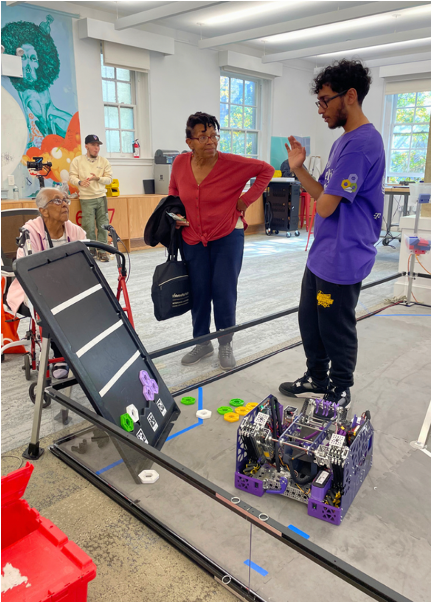
Joy of Learning
We nurture a love of discovery, where curiosity, excitement, and the intrinsic pleasure of understanding the world drive meaningful learning.
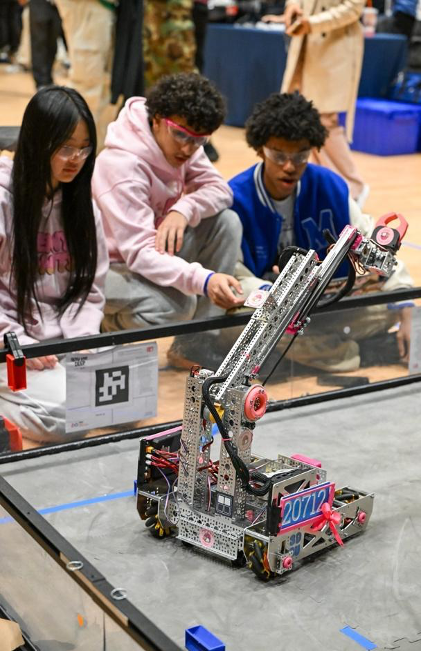
Context & Community Matter
We honor the uniqueness of every learner and place, recognizing that meaningful learning emerges from deep connection to community and context.
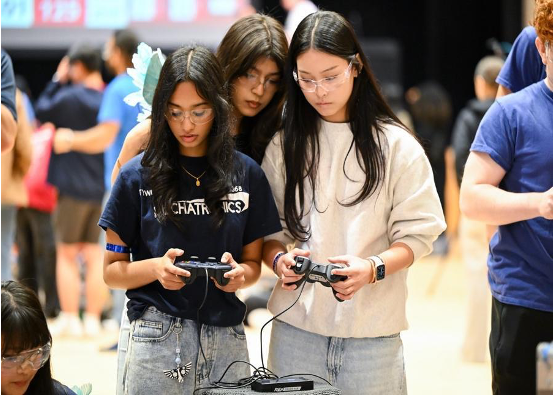
Distributed Authority & Expertise
We distribute leadership, trusting the wisdom of young people, educators, families, and community partners. Thriving—individually and together—cannot depend on heroic individuals.
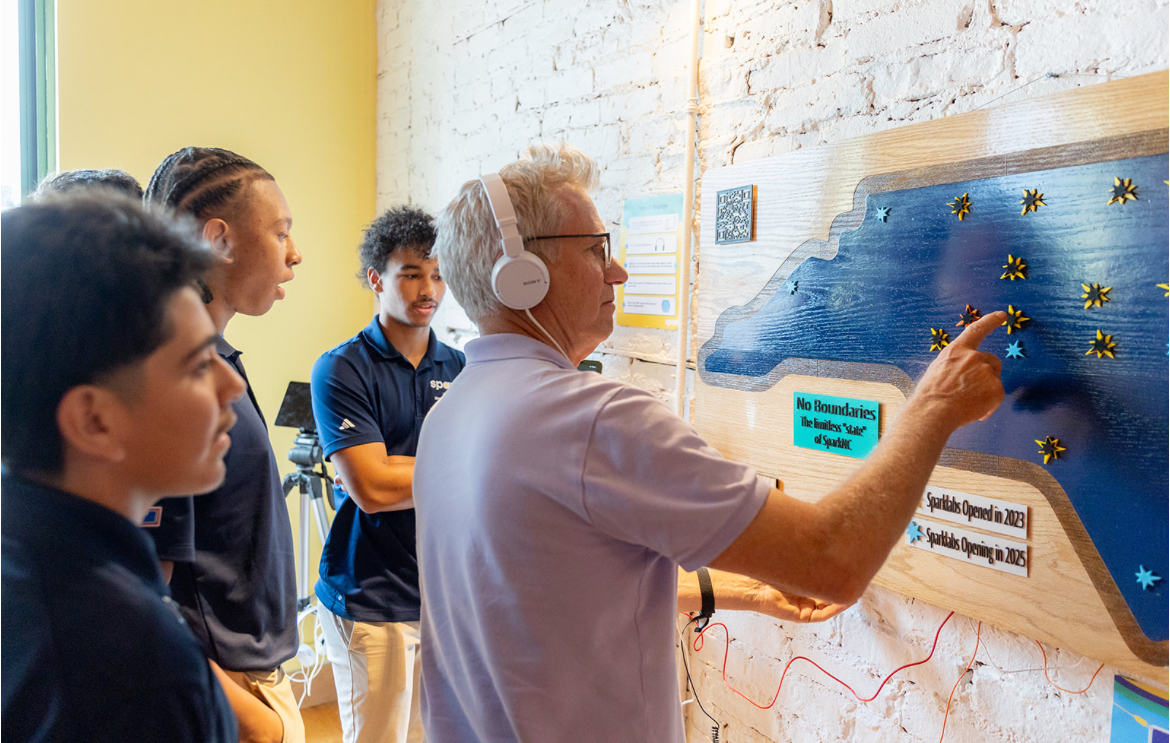
Belonging & Relationships
We cultivate strong, caring relationships among young people, mentors, families, employers, and community partners so that everyone is seen, valued, and able to contribute.
Learner Agency
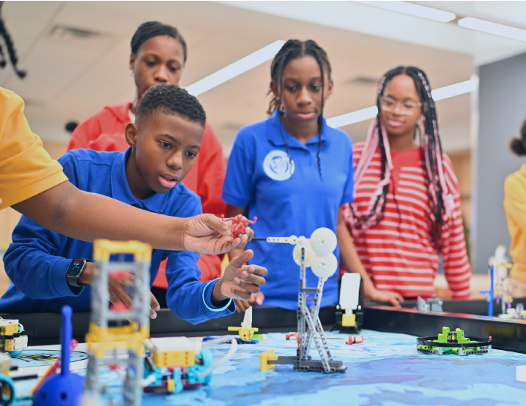
We empower all learners to shape their own pathways, make purposeful choices, and take ownership of their growth.
Authentic Experiences
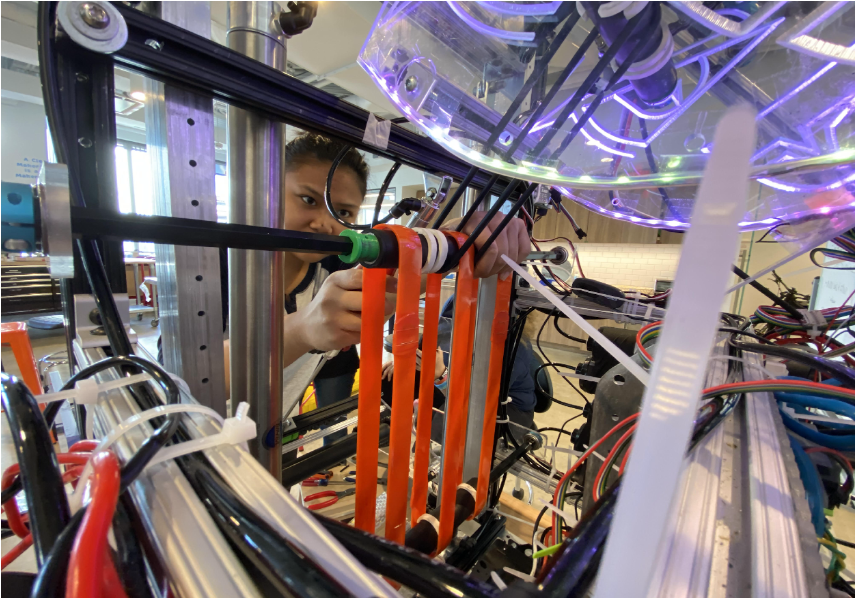
We create access to real-world challenges and opportunities that connect learning to actual impact in the community and beyond.
The Problem We're Solving
Education needs a reboot. We're addressing the systemic issues that hold learners back.
Disconnected Learning
Schools are often self-contained institutions, isolated from the community, leading to work that lacks relevance and agency.
Passive Conformity
Students are frequently excluded from designing their future, expected to conform rather than shape the world around them.
Systemic Burnout
The current system is designed for struggle, burning out young people and adults and failing to provide educators with the information they need to support learners.
Misaligned Outcomes
High school outcomes are often disconnected from the real-world opportunities and goals that exist beyond graduation.
The Learner's Journey
Our learners' progressions are guided by these questions: What is the future I am preparing for? What have we achieved so far and what shifts can we make to improve?
Charting the Path
Finding My Voice, Finding My Way
Students complete two interdisciplinary 'Liftoff' projects—one STEM-focused (robotics, engineering) and one humanities-focused (campaign, research). These projects demonstrate mastery across multiple knowledge, skill, and disposition areas.
Guided Explorations
- Foundational math and algebraic thinking
- Logic and proofs
- Historical context
- Reading and writing in multiple genres
- Rhetoric
Ascent
Passion Project / Deep Dive
An independent study taking the form of a research paper or self-designed experiment. The product feels personally relevant and may contribute to a community or field of study. Students define their audience for feedback and validation.
Guided Explorations
- Qualitative and quantitative analysis
- Synthesizing ideas from academic journals
- Developing relationship with literature
- Experimental design and data collection
- Representing ideas through multiple formats and tech
Flying in Formation
Collaborative Community Project
A collaborative project to design and produce something meaningful to students and community. Products are rooted in the professional world, conducted in partnership with community, or address student-identified needs. Feedback comes from both educators and community.
Guided Explorations
- Global and local governance
- Conflict and leadership
- Aesthetics and artistic form
- Chemistry and environmental science
- Symbolic thinking
Cruising
Leadership & Legacy
Students become primary decision makers within the community. They co-lead guided explorations, mentor younger students, explore higher-level courses at other institutions, and complete their transcript through self-assessment and community validation.
Guided Explorations
- Co-leading guided explorations
- Higher-level courses and certifications
- Revisiting past projects to deepen interests
- Final portfolio and transcript completion
- Community contribution and legacy
What Characterizes Our Guided Explorations?
How Does This Disrupt Traditional Education?
Feedback loops are woven throughout each aspect of stages 1-4 where each stakeholder reflects upon the evidence of learning in student work to identify how they are impacted and the next stage of growth. Through this feedback and reflection, learning becomes less teacher-owned and more student-led. Additionally, the community looks at student work to understand itself and ways that it would like to change and grow.
Building Blocks of Learning
The central focus of our school is projects. These core structures work together to support student growth and project success.
Collaborative Project Planning
Co-driven by teachers, students, and community members. Includes assessment design & expectations, direct instruction needs, and roadmap with deadlines for maker time.
Maker Time
Independent learning and doing time where students work on their projects, apply skills, and make progress toward their goals at their own pace.
Direct Instruction
Structured skill-building sessions led by educators or community experts. Focused, intentional teaching of specific knowledge and techniques students need.
Reflect & Iterate
Regular check-ins to assess progress, gather feedback, and adapt plans. Students and educators work together to identify what's working and what needs to change.
Community Building
Intentional time for belonging, connection, and shared experiences. Building the relationships and culture that make our learning community thrive.
1:1 with Trusted Adult
Personal mentorship and support from a dedicated adult who knows each student deeply. Regular conversations about growth, challenges, and aspirations.
A Day at LiftOff
Our daily rhythm balances structure with flexibility, ensuring time for both focused learning and creative exploration.
Navigating Tensions
Great education lives in the balance. We hold these tensions intentionally, recognizing that both sides are essential to student growth.
Individual Time & Needs
Personalized learning paths, student agency, self-directed exploration
Community Building
Shared experiences, collective rituals, belonging and connection
Skill Building & Deep Knowledge
Structured progressions, foundational competencies, academic rigor
Student Interests
Passion-driven projects, authentic motivation, learner choice
Three Freedoms
Choice in learning, body autonomy, productive risk-taking
Structure for Predictability
Clear expectations, consistent routines, safety and stability
"These aren't problems to solve, but polarities to manage. Our school is organized to support students through all four stages, anchored in our core values while honoring these essential tensions."
Approach to Assessment
Learner-led, community-validated assessment that captures what students truly know and can do.
No Traditional Grades
LiftOff does not provide traditional grades. Instead, learners identify when they are ready to demonstrate mastery or growth on skills, knowledge and disposition areas and lead the assessment process. This enables the decoupling of progress from age/grade.
Evidence-Based Demonstration
When ready, learners gather evidence of their mastery (through projects, performances, and other demonstrations) and complete a self-assessment against a rubric on which they have normed with their educators for that specific area. Students then meet with their educator and any community partners to collect feedback and make a final determination of mastery and progress.
Living Transcript
That evidence, rubric, and feedback is then captured in the learner's profile transcript, which becomes a living capture of what they know and are able to do that they can take with them into college, career, and beyond.
Ultimately, assessment is student-led and community validated.
Ready to Learn More?
Explore our community documents to see how these principles come to life in our daily practice.